
Warning: Undefined variable $html in /home/u877949971/domains/theedupulse.com/public_html/wp-content/plugins/custom-banners/custom-banners.php on line 473
Education has always been the foundation of human progress. However, in the twenty-first century, the purpose and practice of education are undergoing a profound transformation. The rapid growth of digital technologies, artificial intelligence, and global connectivity is redefining how knowledge is created, shared, and utilized.
Today, education must move beyond the traditional focus on information delivery. Knowledge is readily available at our fingertips; therefore, the true challenge is developing the ability to analyze, evaluate, and apply that knowledge effectively. Critical thinking, creativity, communication, collaboration, and ethical decision-making have become essential competencies for future generations.
The integration of technology into education has created unprecedented opportunities. Digital learning platforms, virtual laboratories, intelligent tutoring systems, and online collaboration tools have expanded access to quality education. Students can now learn from global experts, participate in interactive learning experiences, and acquire skills relevant to an increasingly digital economy.
Yet, technology should be viewed as an enabler rather than a replacement for educators. Teachers remain the architects of learning environments that inspire curiosity, nurture character, and encourage innovation. The most successful educational systems will be those that combine technological advancement with human wisdom, empathy, and mentorship.
Equally important is the alignment of education with societal and industrial needs. Academic institutions must foster stronger collaborations with industry, research organizations, and community stakeholders to ensure that learning remains relevant and impactful. Experiential learning, interdisciplinary research, entrepreneurship, and skill-based education should become integral components of modern curricula.
As we look ahead, the future of education will depend on our ability to create inclusive, flexible, and learner-centered systems. Education must empower individuals not only to succeed professionally but also to contribute responsibly to society and address global challenges.
The ultimate goal of education is not merely the transfer of knowledge but the transformation of individuals into thoughtful, capable, and responsible citizens. In an era defined by constant change, education remains humanity’s most powerful instrument for shaping a better future.
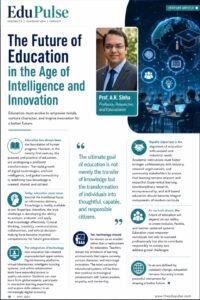
Prof. A.K. Sinha
Professor, Researcher, and Educationist